
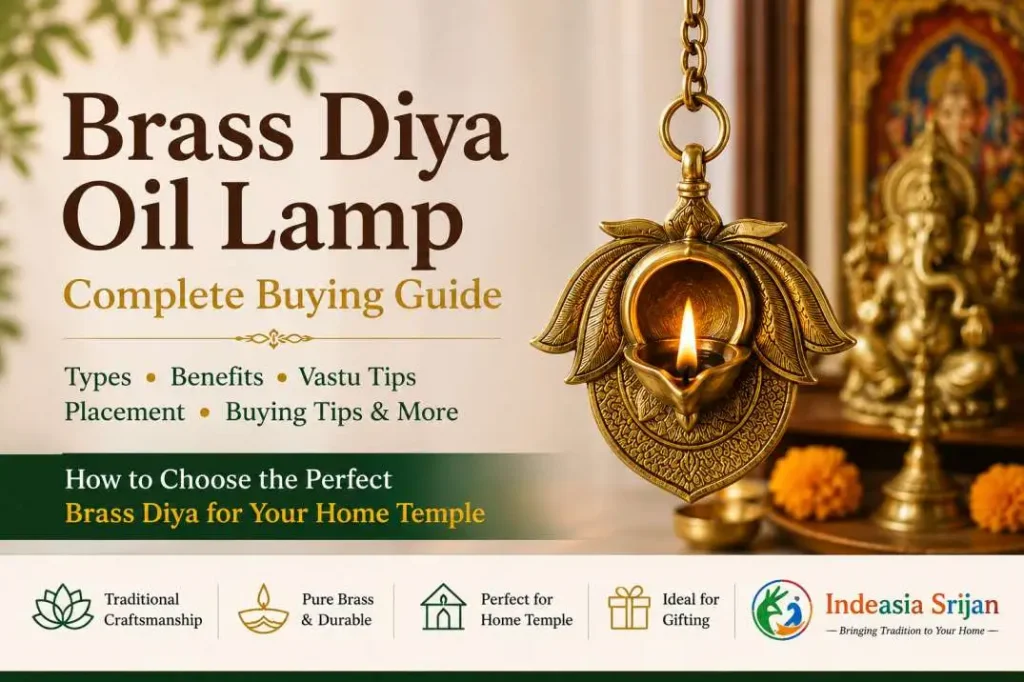
Brass Diya Oil Lamp — How to Choose the Perfect One for Your Home Temple (Complete Buying Guide)
At Indeasia Srijan, Choosing the right brass diya oil lamp sounds simple — until you are actually standing in front of a dozen different styles and sizes, wondering which one is right for your home temple, your pooja room, or the corner shelf you have been meaning to set up for months.
The truth is, not every brass diya is made the same way. The type you choose depends on where you plan to place it, how often you will use it, what kind of space you are working with, and what meaning you want it to carry. This guide walks you through everything you need to know before you buy.
Why Brass is the Only Material That Truly Works for a Diya
Before we talk about types, it is worth understanding why brass specifically matters — because it is not just tradition that makes it the preferred choice.
Spiritual Significance
In both Vastu Shastra and Hindu tradition, brass is considered a highly auspicious and energy-conducting metal. It is believed to attract positive energy and repel negativity — qualities that make it especially suited for a prayer space. A brass diya oil lamp lit during daily aarti is not just a ritual act; it is a deliberate choice of material that carries meaning.
Durability and Longevity
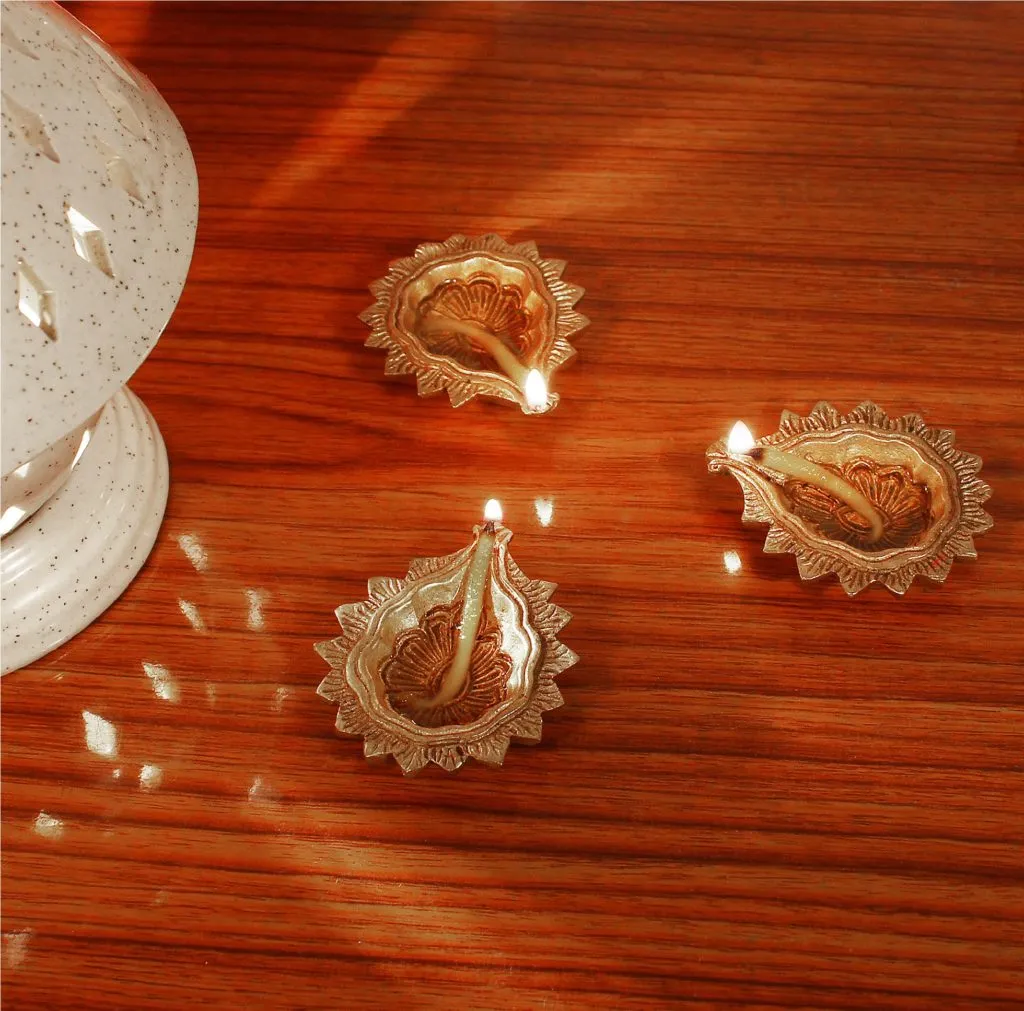
A well-made brass diya does not rust, warp, or crack with regular use. Many Indian families use the same brass diyas for decades — even passing them down as heirlooms. No other material offers that kind of longevity at the same price point.
Aesthetic Warmth
The warm golden tone of brass adds a richness to any interior — whether you have a traditional Indian pooja room or a minimal contemporary altar. It is one of those rare materials that looks beautiful both when lit and unlit.
Types of Brass Diyas — Which One is Right for You?
This is where most people get stuck. Here is a clear breakdown of the main types:
1. Standard Brass Diya (Table Diya)
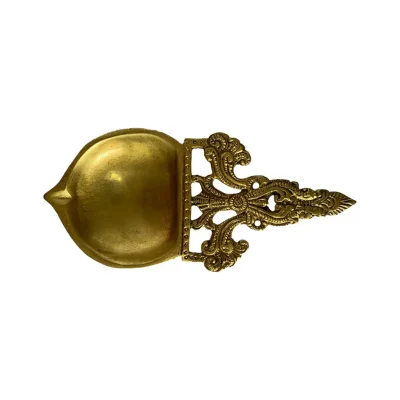
The most common and familiar form — a small, flat oil bowl on a circular base. Used for daily aarti and puja, placed directly on the altar or a wooden surface. Simple, functional, and timeless.
Best for: Daily worship, compact altar spaces, beginners building their first pooja setup.
2. Hanging Diya Lamp (Hanging Brass Diya)
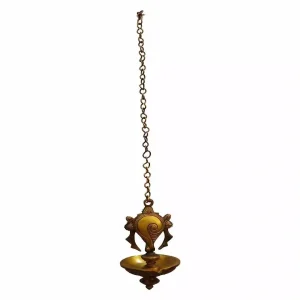
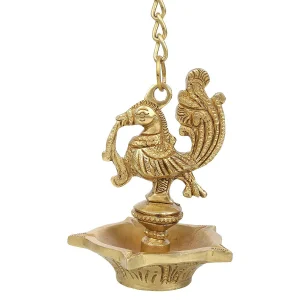
A hanging diya lamp is suspended from a chain or hook, allowing it to be elevated above the altar or in a doorway. The suspended position creates a wider spread of light and a more dramatic visual effect. A good brass oil lamp hanging from the ceiling of a prayer room immediately transforms the atmosphere of the space.
If you are looking for something that works both as a devotional object and a statement piece, a handicraft hanging brass diya is the right choice. The handcrafted versions carry intricate detailing that machine-made alternatives simply cannot replicate.
Best for: Pooja rooms, home temple entrances, balconies, larger spaces.
3. Brass Lotus Oil Diya
The brass lotus oil diya is shaped like an open lotus flower — a symbol of purity, enlightenment, and divine grace in Hindu tradition. These are often multi-wicked, meaning several flames can be lit simultaneously from a single base.
They are particularly popular during festivals like Diwali and Navratri and in spaces dedicated to Lakshmi or Saraswati worship, where the lotus holds specific devotional significance.
Best for: Festival decoration, Diwali, goddess worship, gifting.
4. Multi-Wick Brass Diya
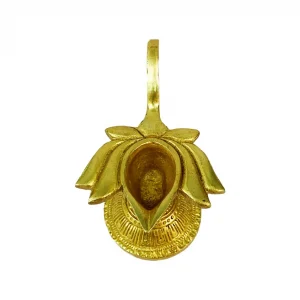
Designed to hold multiple wicks within a single bowl or frame. These are used when a brighter, more expansive light is needed — during aarti ceremonies, at the start of new ventures, or during festival worship. Some versions feature 5 or 7 wicks, each carrying its own symbolism.
Best for: Aarti ceremonies, group worship, festival occasions, large altars.
5. Deepa (Pancha Deepa / Five-Flame Diya)
A traditional South Indian style with five separate flame holders arranged in a single standing structure. Used extensively in temple worship and during major religious ceremonies. The five flames represent the five elements — earth, water, fire, air, and space.
Best for: Temple spaces, formal religious ceremonies, traditional South Indian households.
Key Things to Check Before You Buy a Brass Diya
1. Is it pure brass or an alloy?
This is the most important question. Many cheaper diyas are made from zinc or aluminum alloys with a brass coating—they look similar but do not hold up over time and lack the spiritual and aesthetic qualities of pure brass. Always buy from a seller who clearly states the material.
2. Is it handcrafted or machine-made?
At Indeasia Srijan, every handcrafted brass diya is carefully sourced from experienced Indian artisans who preserve traditional craftsmanship. Our collection focuses on authentic brass products designed for daily worship, festive occasions, and elegant home décor.
You can explore a curated brass diya collection of handcrafted pieces made by traditional artisans across India.
3. Size and Weight
A diya that is too small for your altar can look out of place; one that is too large can feel overwhelming in a compact space. As a general rule, table diyas work best at 3–5 inches, while a brass oil lamp hanging should be proportional to the ceiling height of the space.
4. Single Wick or Multi-Wick?
Single-wick diyas are ideal for daily, quiet worship. Multi-wick versions are better suited for ceremonies and festivals when a stronger, more expansive light is needed. Having both is not unusual — one for daily use, one for special occasions.
5. Ease of Cleaning
Look for diyas with a smooth, accessible oil bowl that is easy to wipe clean after use. Heavily ornate interiors can be harder to maintain over time. The exterior can always be cleaned with a soft cloth; the interior needs to be accessible for regular upkeep.
Where to Place Your Brass Diya — Vastu Tips
Placement is not just about aesthetics. According to Vastu Shastra, where you position your brass diya can affect the energy flow of the entire space.
Best Directions for Placing a Diya
- Northeast direction — the most auspicious placement for lamps, associated with divine energy and positive vibrations.
- East direction — associated with the rising sun; ideal for morning prayers.
- In front of the deity — directly facing the idol or image in your home temple for maximum devotional effect.
What to Avoid
- Never place a diya on the floor directly — always on an elevated surface or platform.
- Avoid placing it in the south direction, which is associated with negative energy in Vastu.
- Never position a lit diya near curtains or flammable materials.
For a Hanging Diya Lamp
A Hanging Peacock Diya works beautifully when hung above the altar, at the entrance of a pooja room, on a balcony, or in a courtyard. The elevated position allows the light to spread more widely and creates a more enveloping, temple-like atmosphere.
Which Oil to Use in a Brass Diya?
The choice of oil matters both for the quality of the flame and for its spiritual significance:
- Sesame oil (til ka tel) — the most traditionally used oil; burns cleanly and is considered highly auspicious.
- Pure cow ghee — used for special pujas and ceremonies; considered the most sacred option.
- Coconut oil — commonly used in South Indian households; burns steadily and has a mild, pleasant scent.
Avoid synthetic oils or kerosene — they burn less cleanly and are not considered auspicious in traditional practice.
How to Care for Your Brass Diya
A brass diya that is well maintained will last for generations. Here is how to keep yours in good condition:
- After each use: Wipe the oil bowl with a dry tissue or soft cloth once the diya has cooled.
- For the exterior: A soft dry cloth is sufficient for regular maintenance.
- To restore shine: Apply a small amount of lemon juice and salt on a cloth, rub gently, then wipe clean with a dry cloth.
- Natural patina: Over time, brass develops a darker, more antique appearance. Many people consider this patina more beautiful than the original shine — it is a sign of age and genuine material.
Brass Diya as a Gift — Why It Always Works
A brass diya oil lamp is one of those rare gifts that works for almost every occasion:
- Diwali — the festival of lights; a handcrafted brass diya is more meaningful than any decorative item from a general store.
- Housewarming — a symbol of light, warmth, and blessings for a new home.
- Weddings and anniversaries — a lasting, meaningful gift that carries tradition.
- Spiritual occasions — for anyone building or refreshing a prayer space.
If you are looking for something that goes beyond the ordinary, explore our handcrafted brass lamps — each piece is made by skilled Indian artisans and comes beautifully packaged.
Looking for a religious idol to complete your home temple setup? Our kuber brass idol for wealth makes a deeply meaningful pairing with any brass diya — bringing both light and divine blessings to your sacred space.
FAQs — Choosing a Brass Diya
What is the difference between a table diya and a hanging diya lamp?
A table diya sits on a flat surface — on an altar, a wooden shelf, or a plate. A hanging diya lamp is suspended from a chain or hook, usually from the ceiling or a wall bracket. Both serve the same devotional purpose, but the hanging version is better suited for larger spaces and creates a more dramatic visual effect.
How do I know if a brass diya is genuine brass?
Genuine brass has a warm, golden-yellow tone and is noticeably heavier than zinc or aluminum alternatives. It does not have a flimsy feel. The best way to ensure quality is to buy from a trusted seller who states clearly that the product is made from pure brass.
Can a brass diya be used every day?
Yes. A well-made brass diya is designed for daily use. Simply clean it after each use and store it in a clean, dry place. Many families light a brass diya every morning and evening as part of their daily prayer routine.
What size brass diya is best for a home temple?
For a standard home altar or pooja shelf, a diya between 3 and 5 inches works well. For a brass oil lamp hanging from the ceiling, size should be proportional to the ceiling height — typically 6 to 10 inches for a residential space.
Is a brass lotus oil diya suitable for daily use?
Yes, though it is more commonly used for special occasions and festivals. A brass lotus oil diya can be used daily if it is your preferred style — just ensure the oil bowl is cleaned after each use.
Conclusion
Choosing the right brass diya oil lamp is less about finding the most expensive or most ornate piece — and more about finding the one that fits your space, your practice, and what you want your prayer corner to feel like.
If you are looking for a hanging diya lamp that doubles as a statement piece, a traditional table diya for daily aarti, or a brass lotus oil diya for festival use, the right piece is out there.
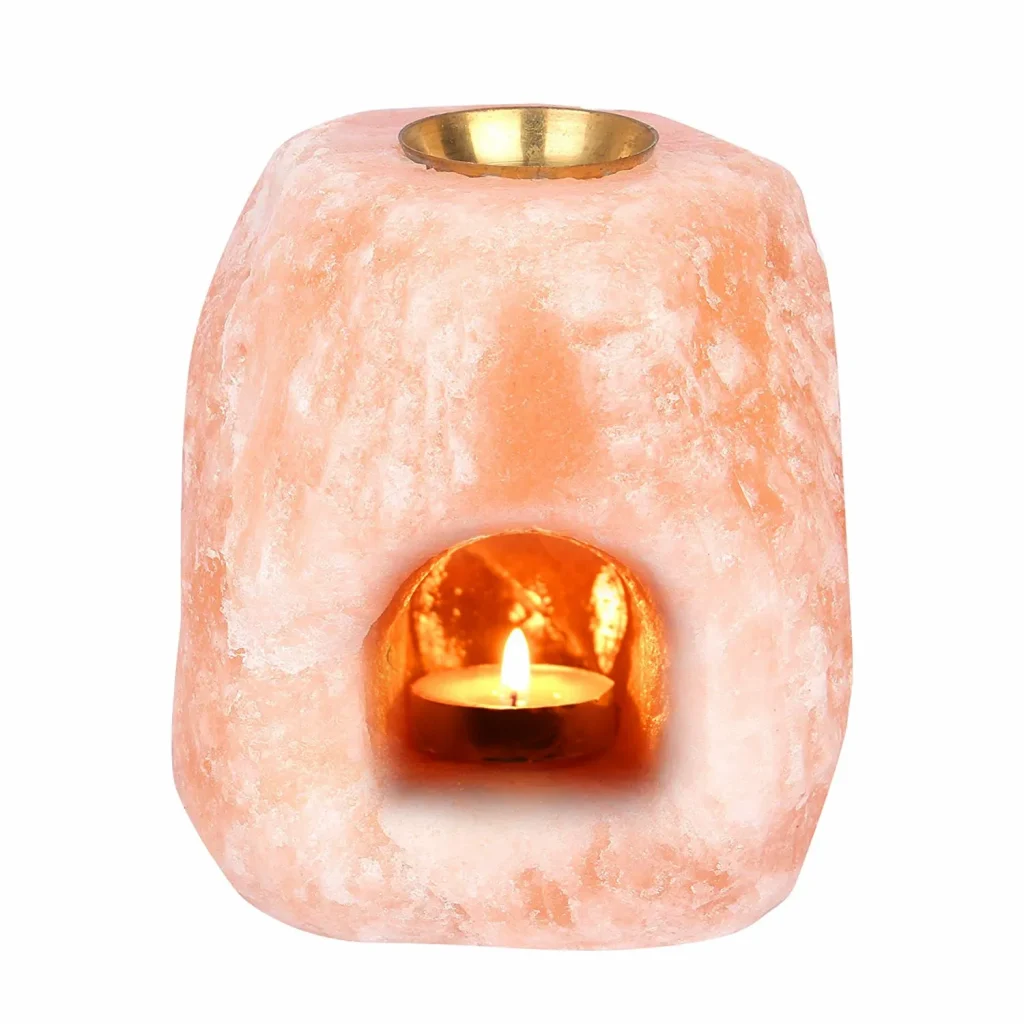
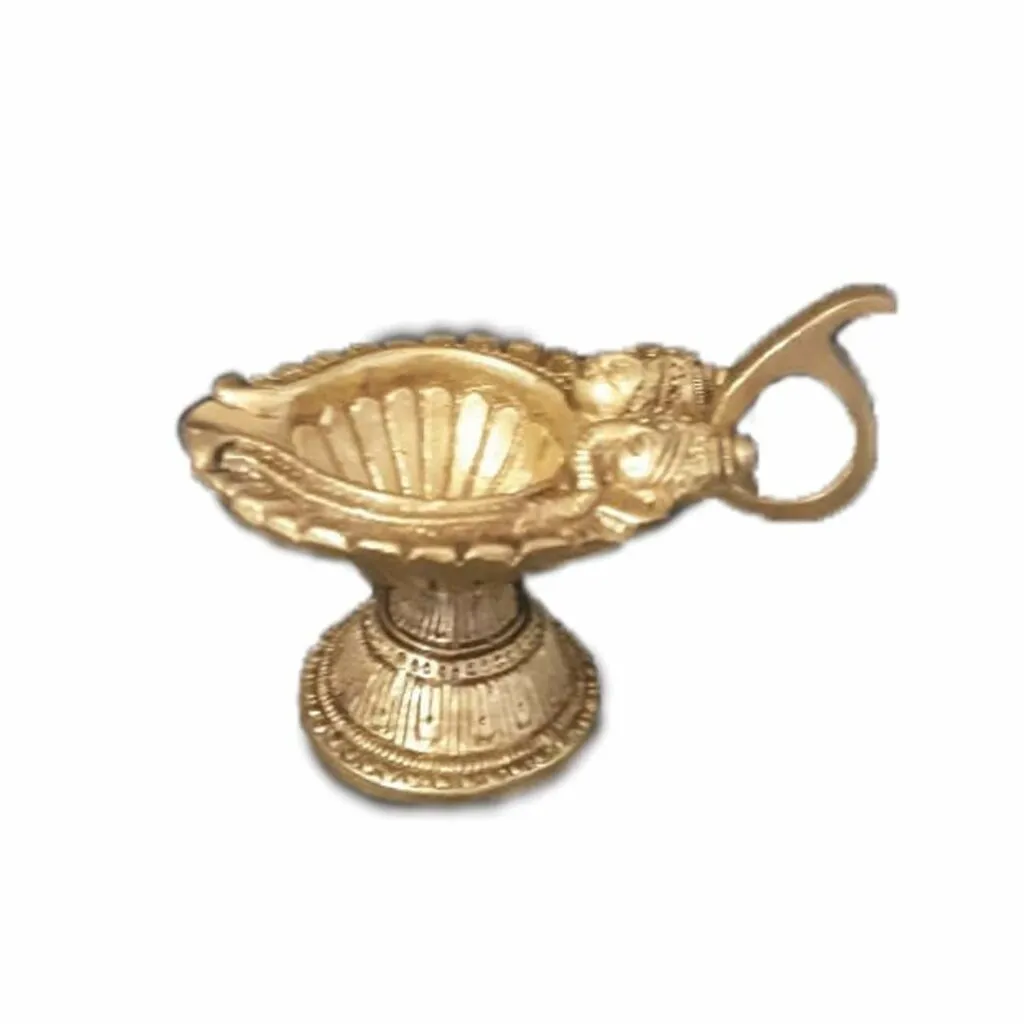
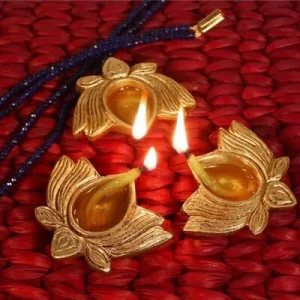
Browse the handcrafted brass diya collection at Indeasia Srijan to find authentic brass oil lamps, hanging brass diyas, and decorative pooja essentials made by skilled Indian artisans. Whether you’re creating a peaceful prayer corner or searching for a meaningful gift, our carefully curated collection combines traditional craftsmanship with lasting quality to help bring warmth, positivity, and timeless elegance into every home.
And if a brass oil lamp hanging is what you have been looking for — explore our handcrafted hanging collection, made to transform any sacred corner into something truly special.
And if a brass oil lamp hanging is what you have been looking for —
Explore our handcrafted hanging collection →